June 28 Byfield Music and Arts Festival 10AM-9PM

Screen Shot 2014-06-27 at 12.20.00 PM

Want to hear live music from 15 different bands, try the brews, buy art, support sustainability non-profits and have fun on a beautiful summer Saturday?

Come join us tomorrow…at Manter Field 10AM-9PM for the Byfield Music & Arts Festival. Directions, tickets, more information is here.

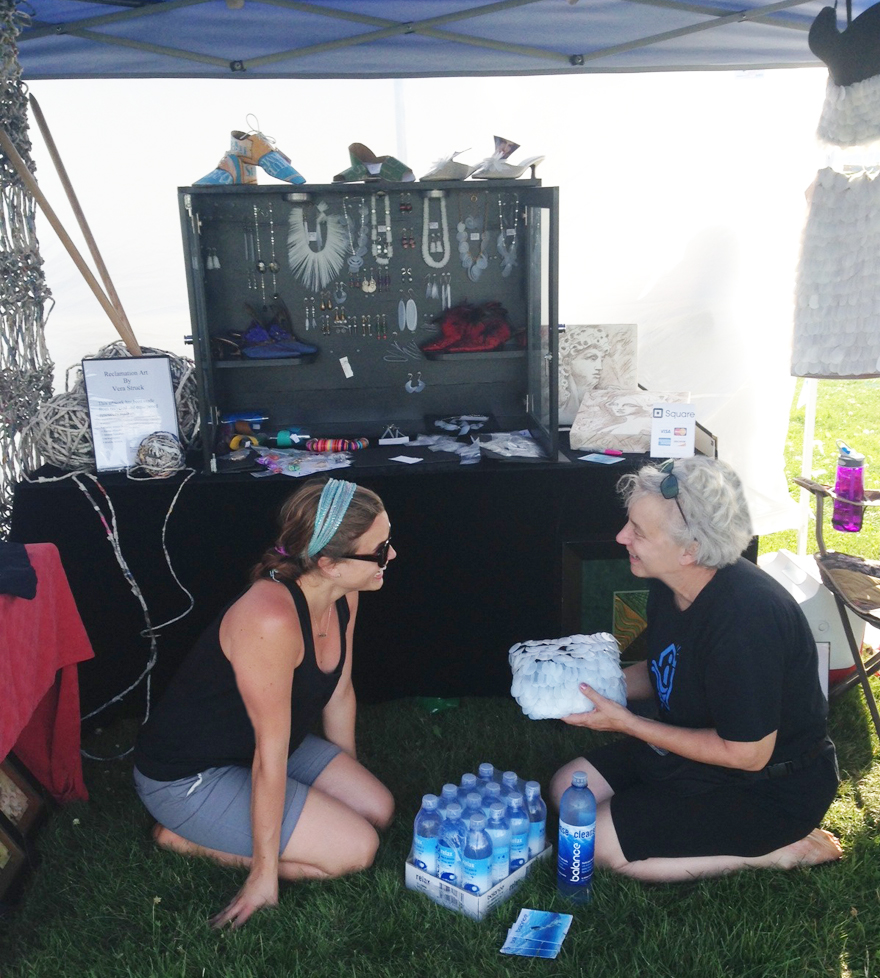
The Struck women will be there at their Struck Studios art booth!!! Come see us!

All proceeds from our sales of gorgeous reclamation artwork and jewelry go to support the Byfield Arts Center and the Net Zero Silver Bullet Tiny House.

Byfield4

Resource Dieting

Screen Shot 2014-10-21 at 7.01.59 PM

“We must use time as a tool, not as a couch.”  John F. Kennedy

Yes, life is short. However, minimizing one’s carbon footprint is not achieved immediately, it is a work in progress. In my sustainable lifestyle design classes students find it daunting to face their clothes closet, their kitchen cupboards, the products below their sink, analysis of their travel/transportation habits, what they eat, their waste-stream, where and how they view their economics, their cultural and social responsibilities through the sustainable lens.

I often tell them to start with baby steps. A shift in perception through a new lens involves adaptation and adjustments. I assure them that soon they will have the confidence and ability to create, see and live their sustainable dream. And it is so satisfying!

Some of us can adapt to more sustainable practices quickly by changing careers, buying carbon offsets, offloading less green automobiles and transportation modes, food, habits, toxic chemicals and becoming more compassionate and socially conscious members of the human race. However, some find it difficult, time-consuming and economically unfeasible.

90% of my students claim their inability to adopt a healthier, reduced carbon footprint life is due to lack of time, money and/or lack of knowledge regarding how to achieve a sustainable lifestyle.

I wish I could tell you that resource dieting and resource stewardship is easy. It isn’t, but it is worth it! One of the reasons it is difficult is that it is a customized and different path for each one of us.

To me that means finding a home, career, community and lifestyle compatible with nature that gives you the maximum amount of leisure, cultural and social engagement, with a minimized carbon footprint, economic and energy output. And to do all this with a minimum of violence and a maximum of compassion towards our fellow humans and other livings beings.

This may be one of the many reasons the tiny house community is popular and why it has gained so many followers in recent years. Many of its members, like myself, have rid themselves of workaholic careers, too much stuff, unhealthy food, unhealthy habits in favor of a healthier, sharing community and leisure lifestyles that leaving the consumptive debt culture affords.

Top five resource diet tips I utilized:

1. downsized with an estate sale, a yard sale, or garage sale

2. arranged a free cycle exchange, a clothing exchange, a cookie or food exchange, a canning/preservative goods exchange

3. bartered services and goods

4. participated in a free bank and gift economy

5. given to many of my favorite non-profits

I continue to meet tons of really great people, have wonderful adventures, time in nature, taken home all kinds of money, lovingly prepared food, canned goods and clothing.

This journey has taught me all kinds of skills about building, refinishing, repurposing and reclaiming all kinds of stuff that would otherwise end up in a landfill. It has taught me about my boundaries, my abilities and my disability, my limits and how to exceed them! My “toolbox” is growing daily.

And best of all, it is fun and one rocking’ great time “tooling'” down the road!
 

The Inner Envelope

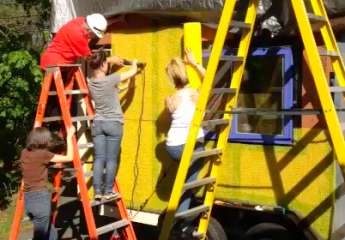
I define the inner envelope of my tiny house as everything between the Zip panel (with its own vapor barrier) and the inner siding.

Walls: Total R Value 18

For rigidity of the structure, in the corners and key areas (about 20% of the entire structure) of my advanced framing, I placed a combo of 1 inch Owens Corning Foamular 250 (R Value 5)  and 2 inch Bonded Logic recycled cotton jean insulation (R value 8).  The last .5 inch is an air layer between the layer of stapled Ecofoil radiant barrier and my interior walls.

In all remaining walls I have 3.5 inch of Bonded Logic (R value 13) slightly pressed in with stapled Ecofoil and .5 inch airspace.

Dormer and Cathedral Ceiling: Total R Value 18

I have 3.5 inch of Bonded Logic (R value 13) slightly pressed in with stapled Ecofoil and .5 inch airspace.

Insulation11


Floor: Total R Value 33

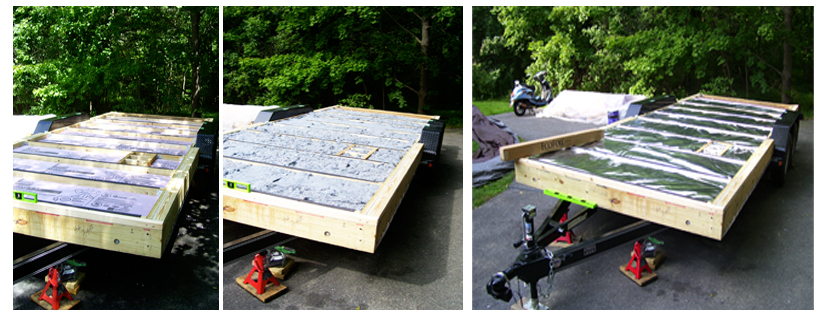
Two layers of 1.5 inch Owens Corning (R Value 15), 3.5 inch Bonded Logic (R Value 13) and Ecofoil (R Value 5).

SubfloorSumm

A Tiny House that Breathes?

Three years ago I was thinking about my future tiny house envelope and chose to incorporate biomimicry as much as I could. This traveling educational exhibit, traditionally designed, to educate others on sustainable lifestyles and building retrofits, rehabs and/or repurposed construction can still incorporate biomimetics in its product choices. My next tiny house will be far more organic in design, with eco-skins, almost imperceptible from its natural surroundings. But I digress.

Nature’s design as inspiration is not new (Sacred Geometry, Golden Mean, etc.). Biomimicry, Cradle to Cradle or LCA (life cycle analysis) concepts are basic inspiration for Smart Sustainable Design.

Deciding on a vented breathing roof and rain screened walls delayed my build a bit and it was well worth it. I began installing Benjamin Obdyke’s product, Homeslicker rainscreen in late Spring during a workshop I held for tiny house enthusiast’s, video below.

My siding applications were done in sections around the house over the summer.*

Later Rainscreen

Note in the middle picture that 3 inches of screen was folded around the edges to allow drainage but discourage insect infestation. More about how to install Homeslicker here.

Homeslicker is a nylon mesh matrix that comes in a 40″ x 46′ roll and has little vertical channels that direct rain flow down the walls surface. It is very easy to install (I’m not a builder) and provides about a 1/8″- 1/4″ air layer, when compressed, between my Zip panels and my metal or wood siding.

Homeslicker will protect your wall assembly from rot and mold, allow moisture to escape, a thermal break, and prevents damage from surfactants between your vapor and siding. A great solution for tiny housers!

*Check out a similar ventilated underlayment, CedarBreather, I installed on my roof here.

Article in Green Builder Media about the Silver Bullet:

http://www.greenbuildermedia.com/tiny-houses/underlayments-protect-tiny-house-from-excess-moisture